Effects and Space
Effects are how you build a sense of room and depth around otherwise flat, close-miked sources. Reverb is the big one: it simulates the sound of a physical space, and two of its controls do most of the work. Decay time, often written as RT60, is how long the tail takes to fade by 60 dB — a short decay suggests a small room, a long one suggests a cathedral. Pre-delay is the small gap before that tail begins, and it is what keeps the dry source clear and up front instead of being swallowed by its own reverb.
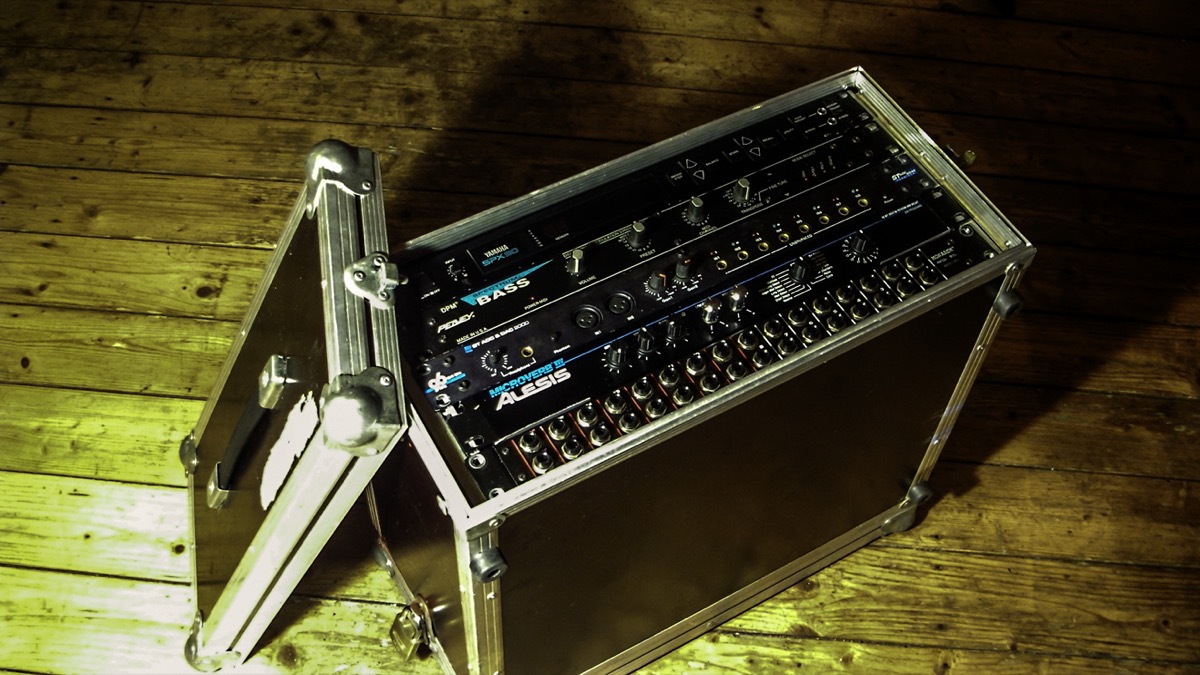
Delay produces distinct, repeating echoes, and you tie them to the music with a little arithmetic. A quarter-note in milliseconds is just 60,000 divided by the tempo, so a 120 BPM song gives a 500 ms quarter-note and a 250 ms eighth. Lock the repeats to those values and they sit in the groove instead of fighting it. Modulation effects like chorus and flanger take a copy of the signal and gently detune or retime it to add width and movement.
The thing that makes all of this work is contrast — dry against wet, near against far. A vocal feels present and intimate when it is mostly dry with just a touch of plate reverb; a guitar drifts to the back of the stage when it is washed in a long hall. Pile effects onto everything at once and that contrast collapses, taking the intelligibility with it. The usual trap is that effects feel thrilling when you solo them and then quietly bury the words in the full mix, which is why the moment you can clearly pick the effect out as its own thing, it is already too loud.
If you notice the effect, it's already too loud.