Atmospheric Effects
A beam of light is invisible until something in the air scatters it back toward your eye, and atmospheric effects are how you supply that something. A hazer produces a fine, even suspension that hangs in the air for minutes and reveals every beam consistently — it is the workhorse that makes moving-light and laser looks read at all. A fogger makes denser, shorter-lived bursts, useful for reveals and big dramatic moments. Low-fog and cryo effects use CO2 or liquid nitrogen to chill the fog so it hugs the floor, lasting only a few seconds before it dissipates.
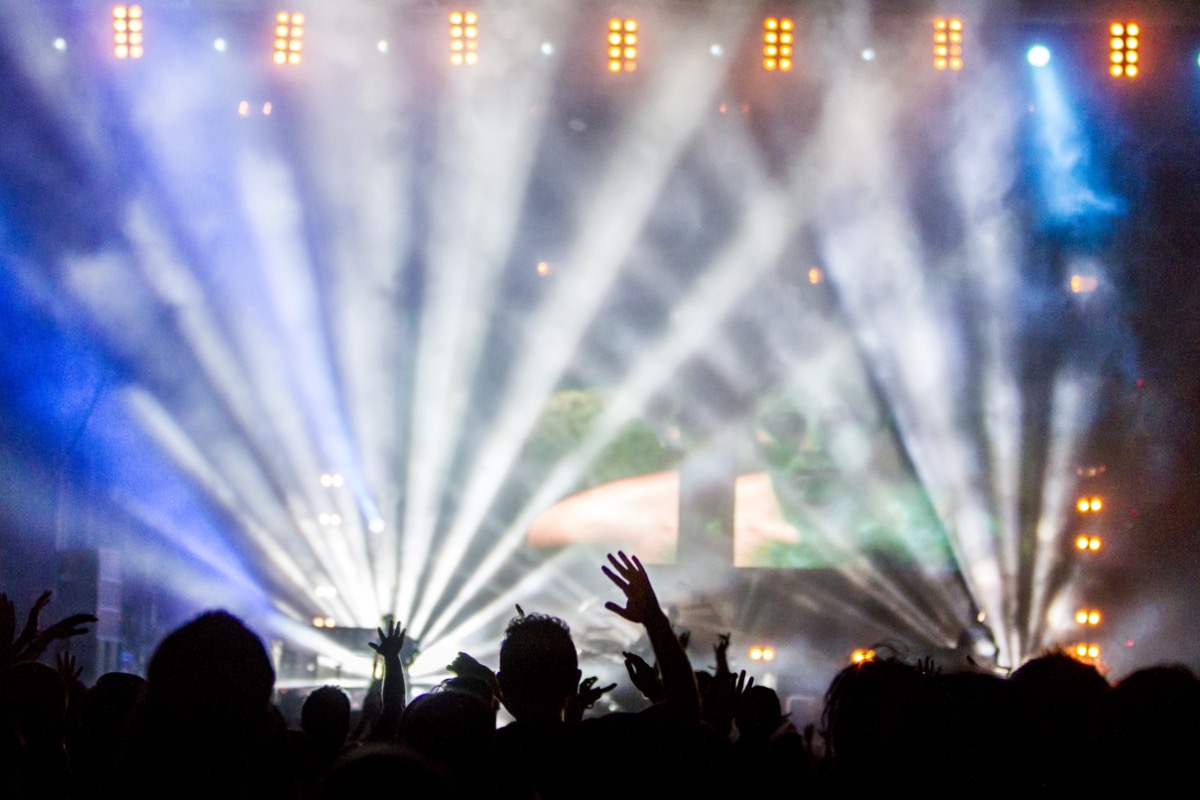
Density is something you manage actively rather than set and forget. Too little and the beams simply vanish; too much and the stage turns to soup, sightlines disappear, and the haze flattens the very contrast it was meant to enhance. Heavy output has consequences offstage too: it can set off smoke detectors, so it needs coordinating with the venue and its fire system, and it affects the air that performers and crew are breathing all night, which is why you use the minimum that achieves the look.
The guiding idea is straightforward. The job of atmosphere is to make light visible, not to fill the room with fog. It is there in service of the beams, and the moment it starts obscuring the show instead of revealing it, you have used too much.
Atmosphere enhances light — it should not obscure it.