Intelligent Lighting Systems
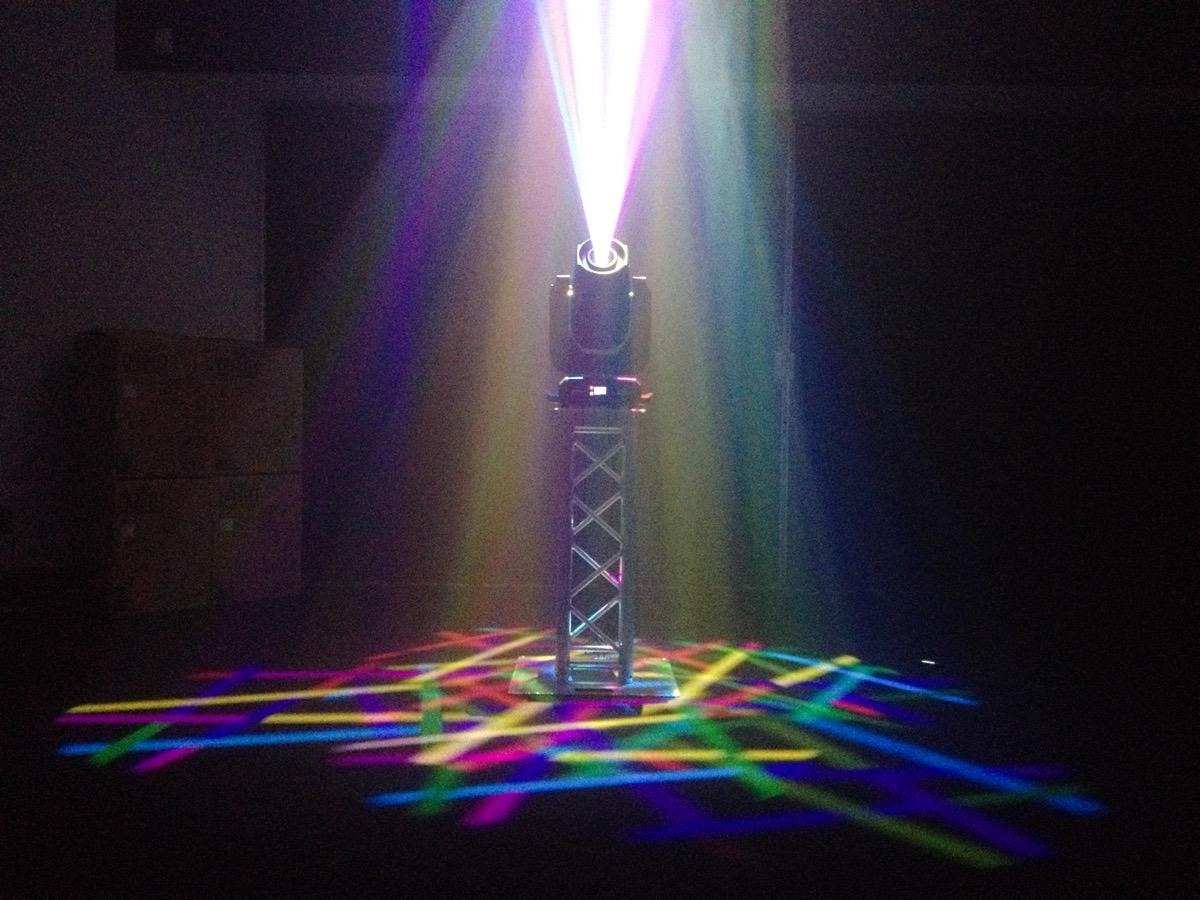
Moving lights add motorised control over a beam's position, colour, and shape, and they fall into a few families worth telling apart. Spots carry gobos, an iris, and a focus system, so they can throw sharp projected beams and crisp shapes. Washes give wide, soft colour coverage. Beams produce a tight, dense shaft of light, the kind you see cutting through haze in mid-air looks. Pan typically covers 540 or 630 degrees and tilt around 270, which is why a single moving light, well placed, can cover an entire stage on its own.
All that capability comes at the cost of control channels. A simple wash might use a handful of DMX channels, but a feature-packed spot can consume thirty or more — pan, tilt, colour wheels, gobos, prism, focus, zoom, and shutter each need their own — which is exactly why you plan your universes before you start patching. Each fixture also needs a unique DMX start address and a clean, stable power feed.
When they power up, moving lights "home," driving their motors to known reference positions so the console and the fixture agree on where everything is pointing. A fixture that cannot home, or that loses its calibration partway through a show, will point in the wrong place all night. The failure points to watch for are the predictable trio: addressing conflicts where two fixtures share an address, signal loss that freezes them, and reaching a mechanical pan or tilt limit in the middle of a move.
Address every fixture correctly before powering the rig.