Console Fundamentals
The console is where the whole system comes under one pair of hands: gain, tone, and routing in a single surface. Following a single channel from top to bottom is the clearest way to understand it. It begins at the preamp, set by the trim or gain control, which decides how hard the input drives everything that comes after it. Then EQ shapes the frequency balance. Aux sends tap a copy of the signal off to monitors and effects. The fader sets how much the channel contributes to the main mix, and bus and matrix outputs feed the PA, the recording, and any broadcast split.
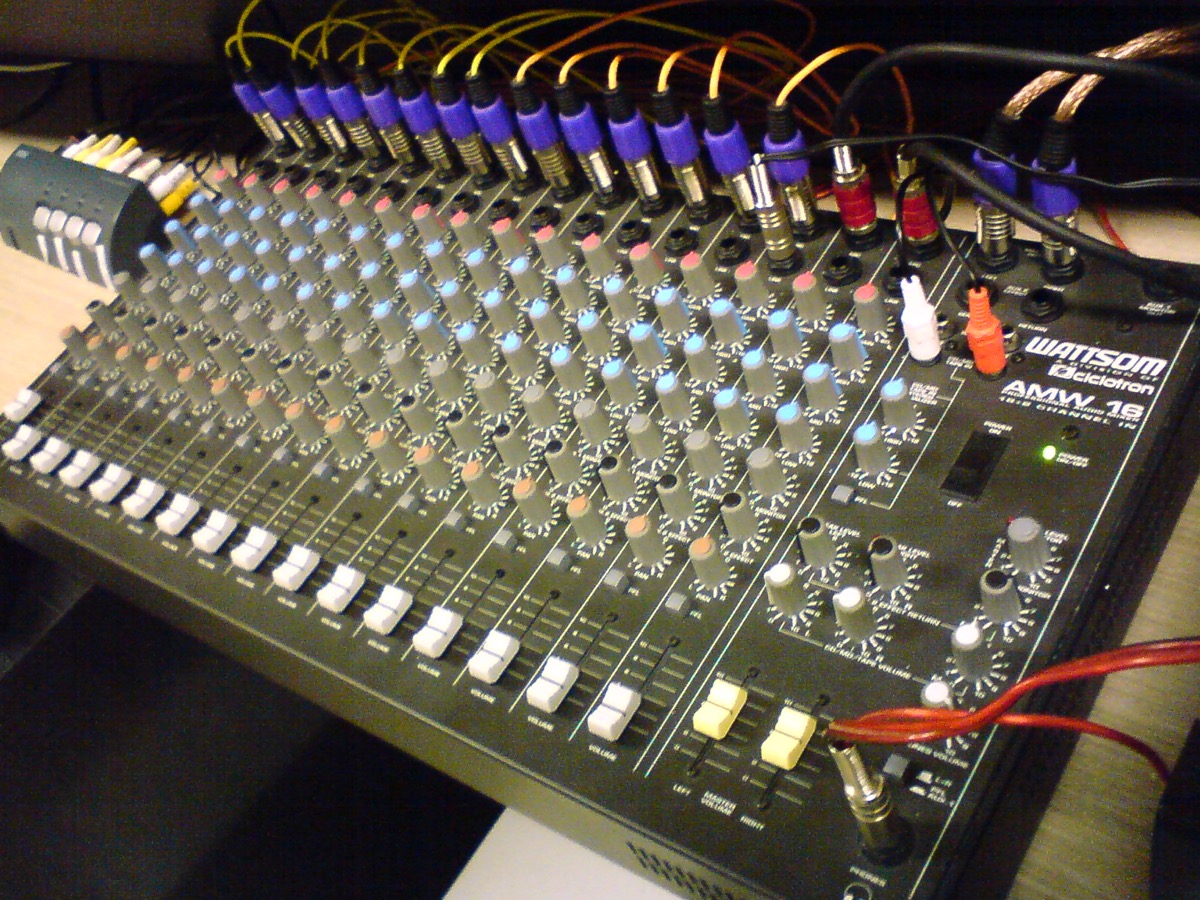
There is one distinction that trips up almost everyone at the start: pre-fader versus post-fader sends. A pre-fader send ignores the channel fader entirely, so the level it sends stays put even as you ride the house mix up and down — exactly what you want for a performer's monitor mix, which should not jump around while you work the front of house. A post-fader send follows the fader, so the amount sent rises and falls with the channel, which is what you want for reverb and delay so the effect tracks the source naturally.
The solo system mirrors that same logic. PFL, pre-fade listen, lets you check a channel's input regardless of where its fader sits; AFL, after-fade listen, lets you hear it in context within the mix. When sends are misrouted, the symptoms are predictable — a signal that should be there is missing, a feedback loop appears, or a monitor mix makes no sense at all — and knowing this layout is what turns those symptoms back into causes.
Know where your signal is going before you push it there.