Monitor Systems
Monitors exist so performers can hear themselves while they play, and they matter more than they look like they should — a shaky monitor mix will wreck a performance faster than any problem out in the house. There are two main approaches, each with its own character. Floor wedges fire up at the performer from the stage and share the air with open vocal mics, which means they live one notch of gain away from feedback. In-ear monitors seal the performer off from the stage, give them a consistent mix wherever they move, and bring the overall stage volume down — but they demand a rock-solid feed and a careful balance, because a dropout leaves the artist suddenly deaf.
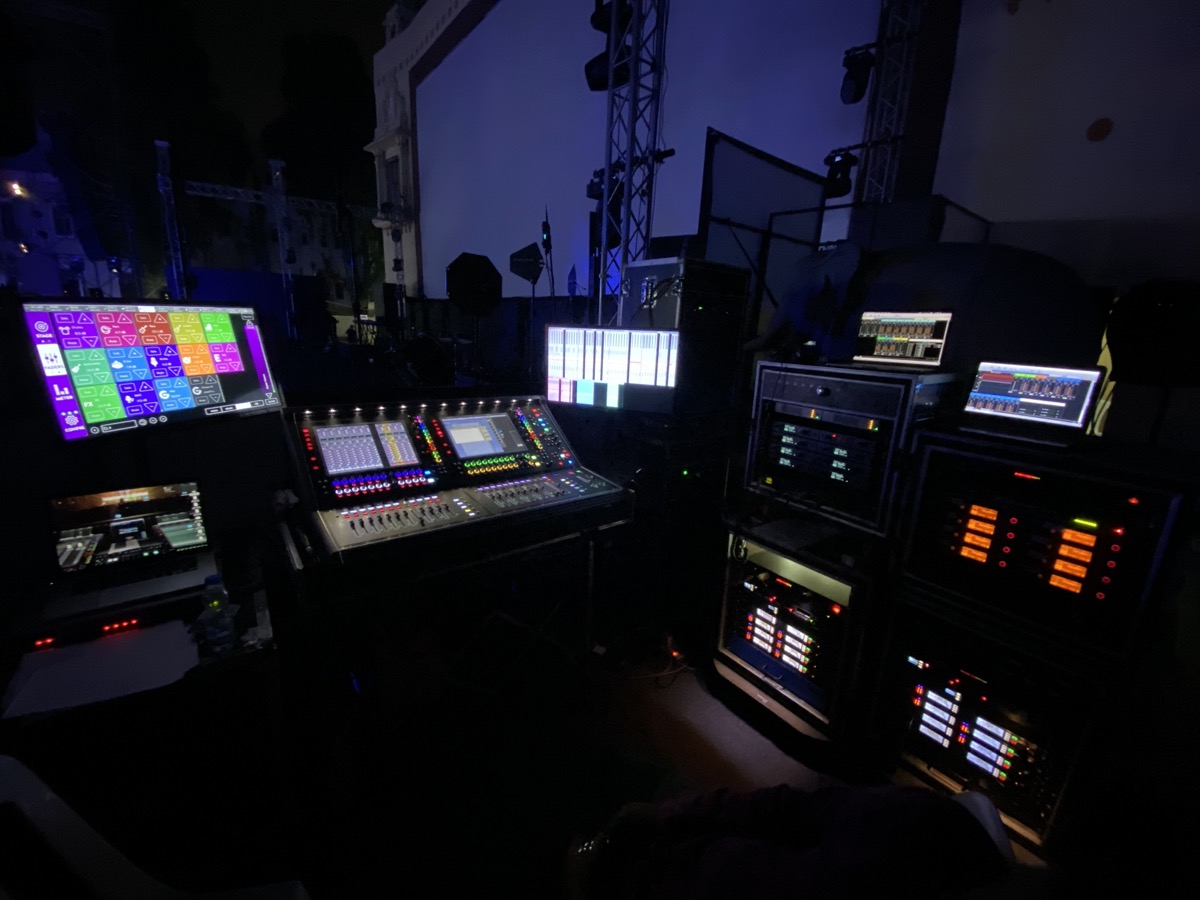
Controlling feedback on a wedge comes down to geometry and restraint. You aim the wedge into the microphone's null so the mic hears it as little as possible, you keep its level only as high as it genuinely needs to be, and before the show you "ring out" the room — pushing the monitor send up until it just begins to ring, then notching that frequency back with a narrow EQ cut. Do that across the troublesome frequencies and you buy yourself a useful margin.
Every performer needs their own stable mix, tailored to what they actually need to hear, which is usually their own voice or instrument plus a timing reference like the kick or a click. And the order of priorities is clear: settle the stage before you touch the house. A band that is comfortable plays better, while one chasing a bad monitor mix never quite settles into the show.
Fix the stage mix before touching the house.