Switchers and Scalers
A switcher and a scaler do two different jobs that get easily confused. A switcher chooses which source reaches the output. A scaler converts every incoming source to one common format, so that when the switcher cuts between them, the transition is clean. Without scaling, cutting from a 1080p60 laptop to a 1080i50 camera throws up black frames or glitches while the display scrambles to relock to the new format.
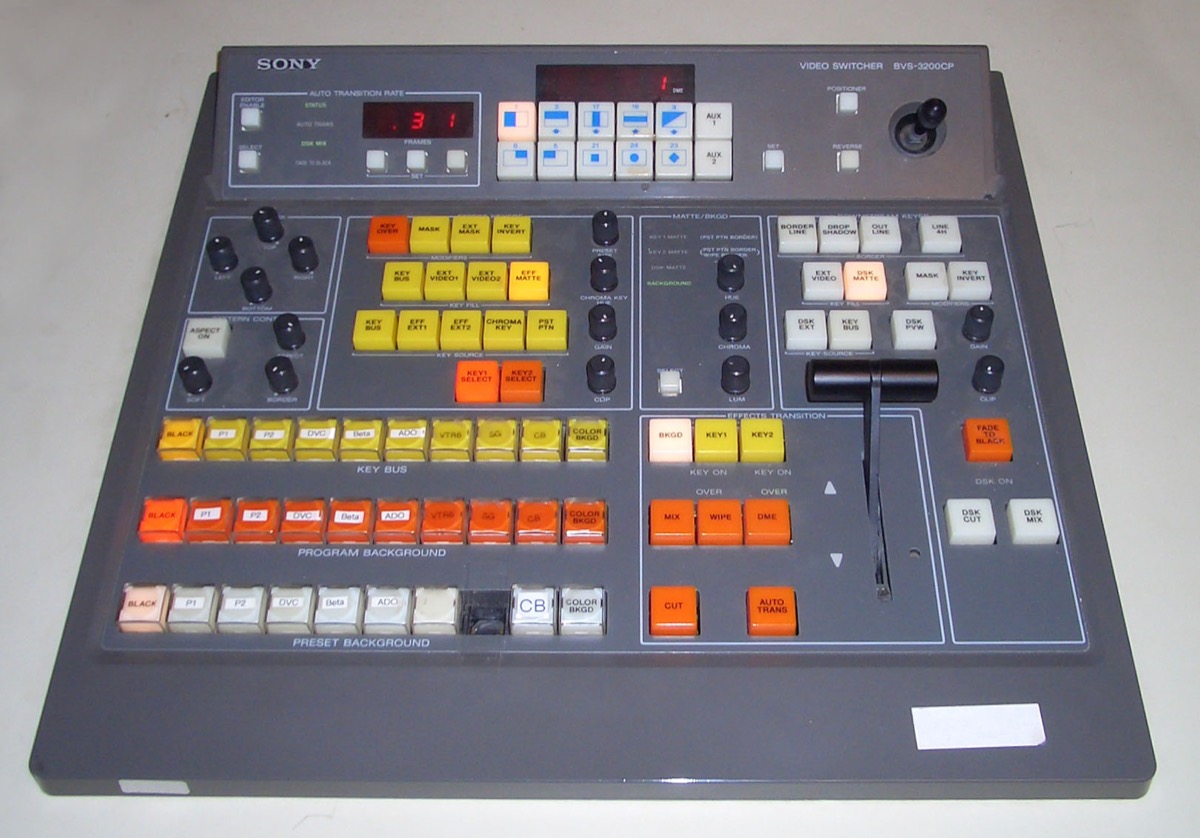
But matching resolution is not enough on its own. For a truly seamless switch — a clean cut or a smooth fade with no disturbance at all — the inputs also have to be frame-synchronised, meaning their individual frames begin at the same instant. That synchronisation is the job of genlock: a shared reference signal distributed to every device so they all march in step, or a frame synchroniser inside the switcher that buffers each input and re-times it to a common clock. Inputs that are both format-matched and frame-locked transition invisibly; inputs that are not, simply cannot.
It also helps to remember the fixed order of the signal path: input first, then scaling, then switching, then output. Hold that order in mind and most "the switcher is unstable" complaints resolve into something simpler — a source running at the wrong rate, or one that was never genlocked. The fault is usually in the un-normalised input, not in the switcher itself.
Sync every input before it hits the switcher.