LED Wall Systems
An LED wall is built up from modular panels, and the single most important spec is its pixel pitch: the distance in millimetres between one LED and the next. A 2.6 mm pitch packs the pixels tightly together for close viewing, while a 10 mm pitch is coarse but perfectly acceptable at a distance. A handy rule of thumb is that the comfortable minimum viewing distance in metres is roughly the pitch in millimetres — so about 2.6 metres for a 2.6 mm wall. Step closer than that and you start to make out the individual pixels.
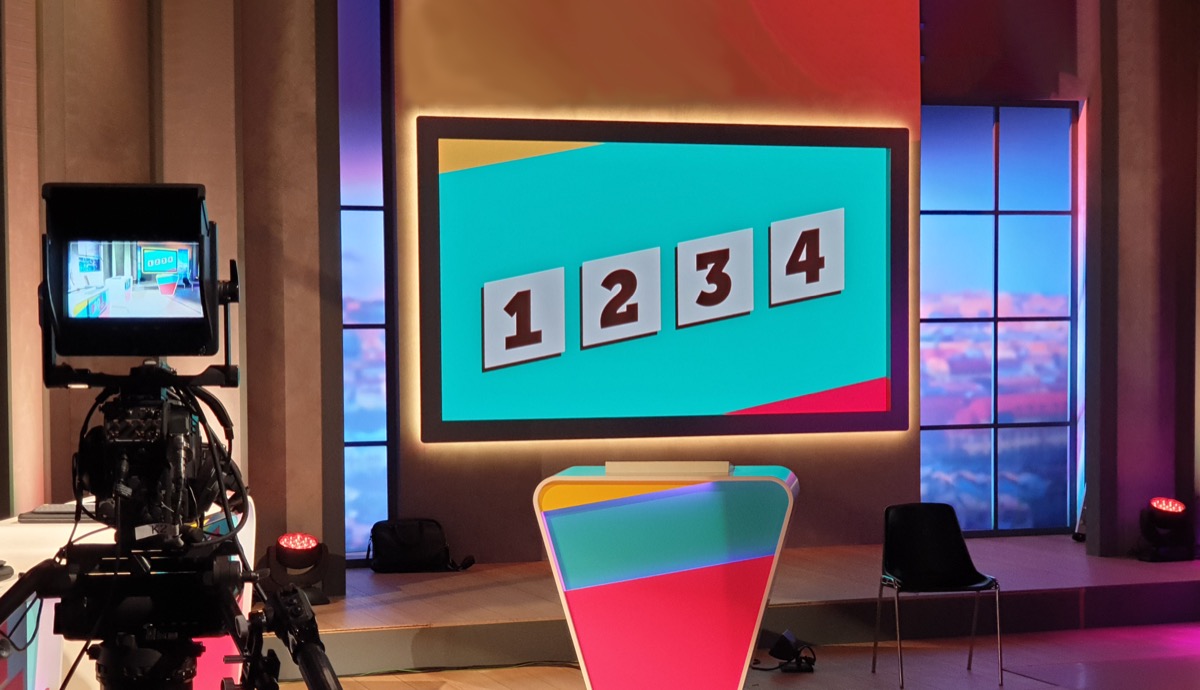
Behind the wall sits a processor, sometimes split into a sender and a set of receiver cards, whose job is to map the incoming video onto the physical arrangement of panels, handling resolution, colour, and frame timing along the way. When that mapping is set up wrong, the image tears, repeats, or scrambles itself across the tiles — so the processor configuration is every bit as important as the panels.
One characteristic of LED walls is worth flagging because it catches people out: they are far brighter than projection, often somewhere between 1000 and 5000 nits. Indoors that brightness has to be dialled right down, both to avoid overwhelming the room and to keep cameras from being blinded. And on camera there is a further subtlety — the wall's brightness, scan rate, and the camera's shutter all have to be coordinated, or the wall shows bands and flicker on screen. That is precisely the synchronisation problem the Camera / LED Sync tool is built to work through.
Choose pixel pitch based on viewing distance, not budget.