Wireless Audio
Wireless microphones and in-ear systems send audio over radio, mostly in the UHF television band, and they reward planning the way few other things in audio do — because the spectrum they share is invisible, crowded, and not entirely yours. In the United States the usable range is now roughly 470 to 608 MHz; the old 600 MHz and 700 MHz blocks were auctioned off to mobile carriers and are off-limits, and transmitting in them is actually illegal. Europe centres on 470 to 694 MHz. The first step on any show is to scan the local spectrum and place each system on a frequency that is genuinely clear.
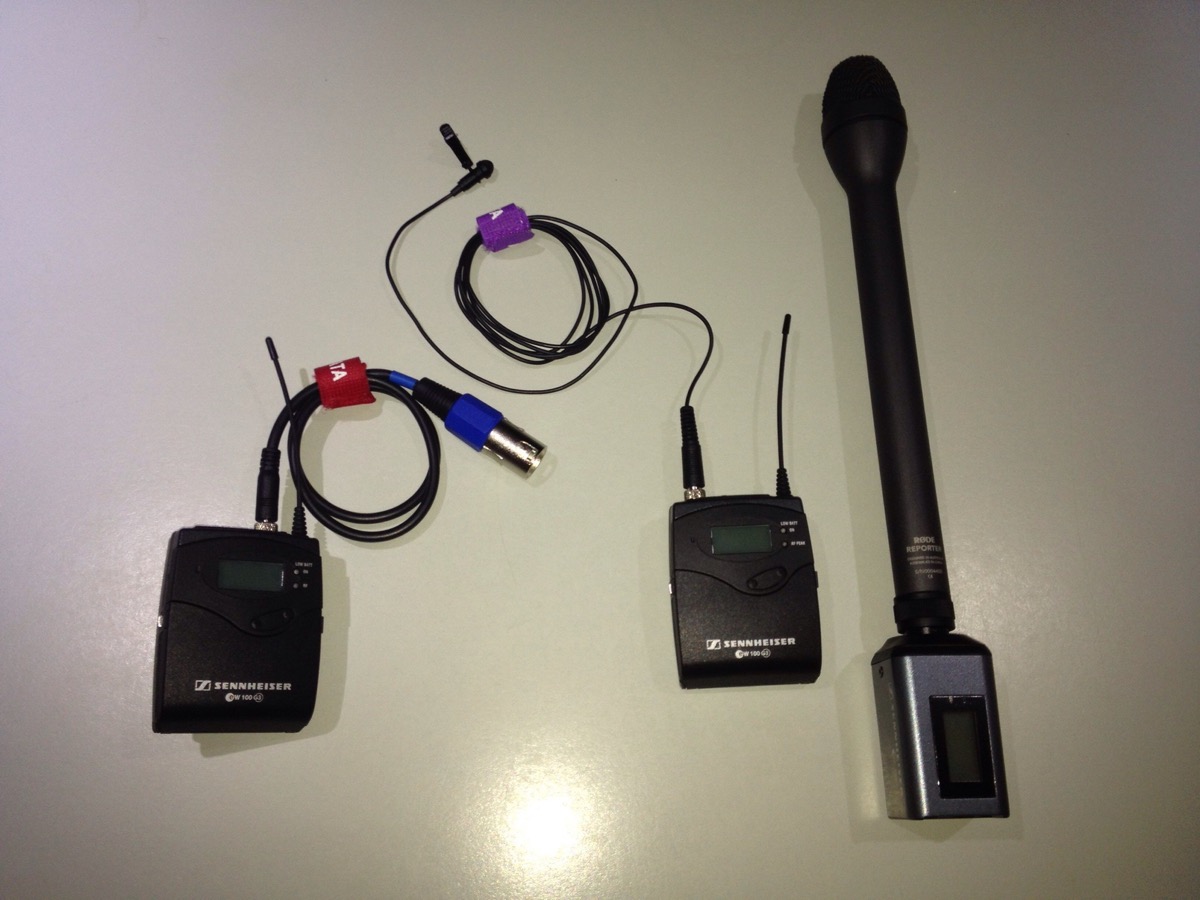
The complication that surprises newcomers is intermodulation. When several transmitters operate close together, their frequencies mix and produce phantom signals at new frequencies — and one of those phantoms can land squarely on a channel you are using. This is why you cannot simply space your channels out evenly and hope for the best; coordination software exists to calculate sets of frequencies that stay clear of each other's intermod products.
Antennas matter just as much as frequencies. Keep them in line of sight of the transmitters, use a proper antenna distribution system instead of a thicket of separate whip antennas, and respect the range limits of the gear. Squelch is the safety net that mutes a receiver when the RF signal drops below a usable threshold, so a dropout gives you clean silence instead of a burst of harsh noise. Through all of it, remember that every wireless link is a potential point of failure that a cable simply does not have — which is exactly why you coordinate carefully before anything goes live.
Scan and coordinate RF before turning anything on.