Projection Mapping and Edge Blending
Several projectors can be combined into a single large image, and two techniques make it possible. The first is edge blending. You overlap the adjacent images by a defined region — often 10 to 25 percent of the image width — and then fade each projector's brightness across that overlap so the seam disappears into a smooth join. The subtlety is that the blend has to be gamma-corrected: two projectors each at 50 percent in the overlap do not simply add up to the same perceived brightness as one at 100 percent, so if the curve is wrong the seam reappears as a visibly brighter or darker band right where you were trying to hide it.
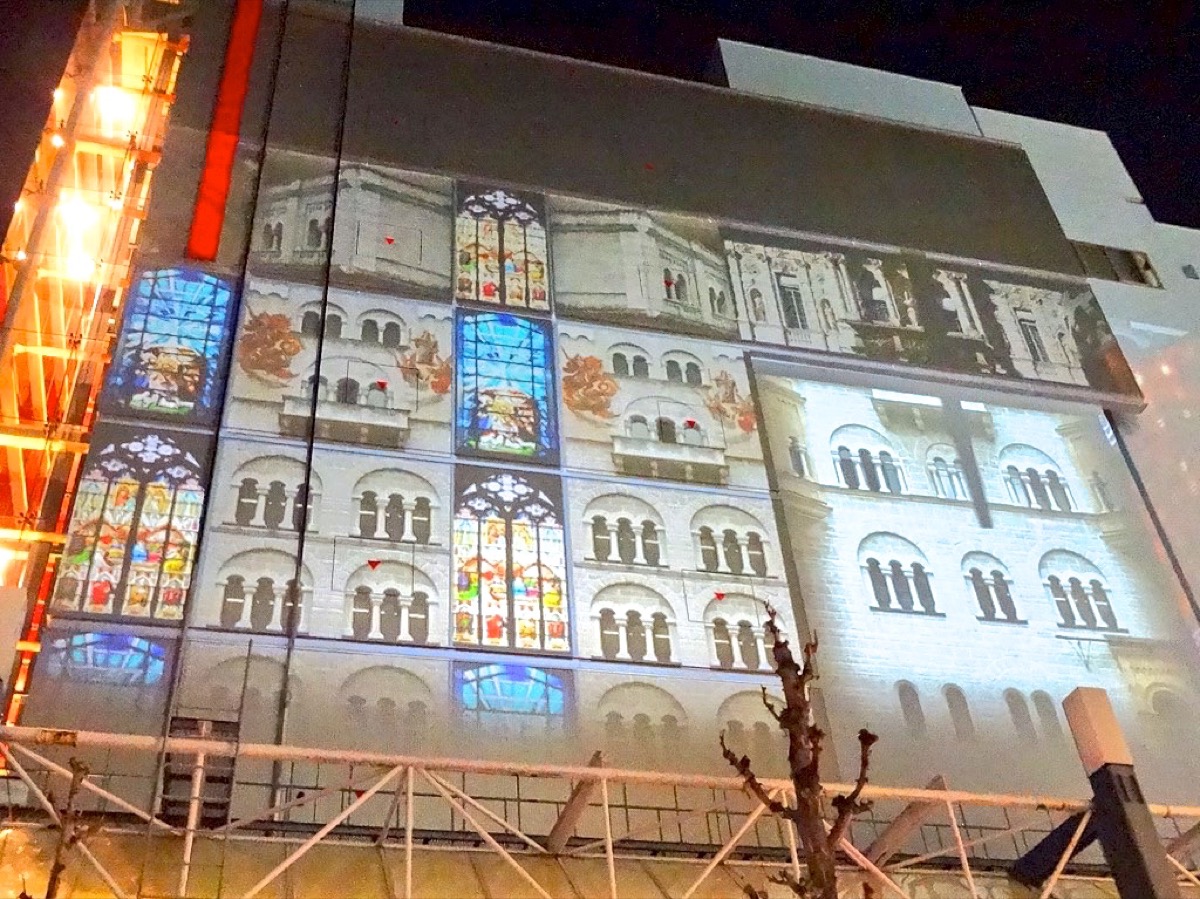
The second technique is projection mapping, which warps the image to fit a surface that is not a flat screen — a set piece, a curved wall, the face of a building — so the content lands exactly where it is meant to. Crucially, the warp is the last step, applied on top of projectors that are already well placed.
Underneath both techniques sits the same principle: alignment is physical first, software second. No amount of warping or blending rescues projectors that are only roughly aimed. You stack and overlap them mechanically, match their brightness and colour (lamps age and gain drifts, so two projectors rarely agree out of the box), and only then blend and warp. A well-matched pair reads as one continuous screen; a mismatched pair always looks like two projectors pretending to be one.
Alignment first, software second.