HDMI, SDI, and DisplayPort
Digital video can travel over several different transports, and each one makes a different trade between convenience and reliability. Understanding those trade-offs is what lets you pick the right cable for the stakes of the job rather than just the one that fits the socket.
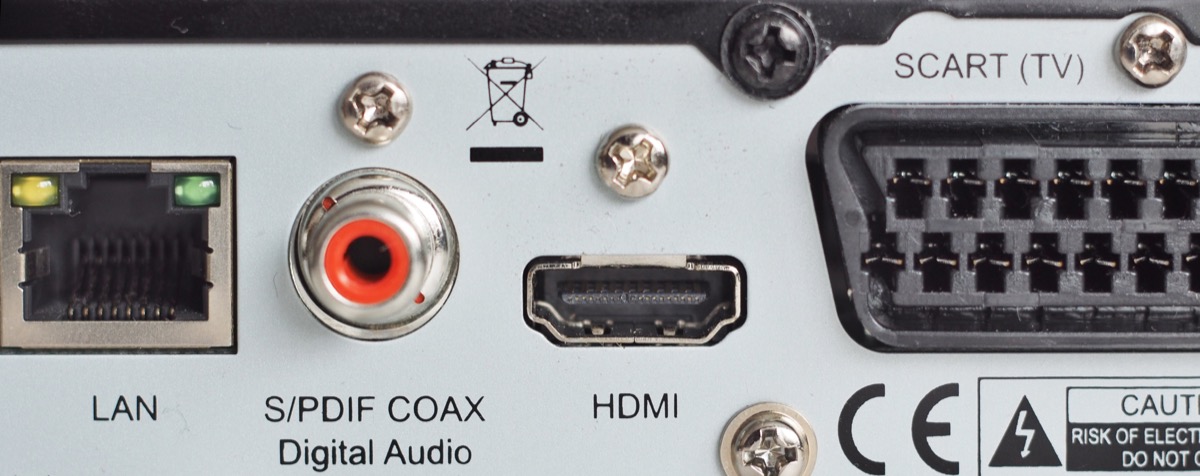
HDMI is everywhere on consumer gear, laptops, and presentation systems, and for casual use it is wonderfully simple. In a live rig, though, it is the fragile one. Every time it connects it negotiates a handshake — exchanging EDID information and often HDCP encryption keys — it has no locking connector to stop it being knocked loose, and passive cable runs become unreliable somewhere past roughly 5 to 15 metres depending on the resolution. It is perfectly fine for a lectern laptop; it is a risk for anything the show depends on. SDI is the opposite philosophy. Built for broadcast, it runs over 75-ohm coaxial cable with locking BNC connectors and carries video reliably over long runs — on the order of 100 metres at HD. Its data rates are standardised and predictable: HD-SDI (SMPTE ST 292) is about 1.485 Gbps, and 3G-SDI (ST 424) about 2.97 Gbps for 1080p60, with 6G and 12G variants for 4K. It locks in place and simply works, which is why critical signal paths are built on it.
DisplayPort is the third option. It offers very high bandwidth and is the natural choice for driving high-resolution computer displays and LED-wall processors, but it lives mostly in the computing world rather than the live-signal one. Put together, the lesson is about matching the transport to the consequences: SDI where a dropout would be unacceptable, and HDMI where convenience wins and there is a backup ready.
Critical signal paths use SDI — not HDMI.