Network Hardware
It helps to keep two boxes straight from the start: switches connect devices within a single network, while routers connect different networks to each other. For AV work the switch is the box that makes or breaks reliability, and the key distinction is between managed and unmanaged. An unmanaged switch simply passes traffic along with no control over how. A managed switch lets you configure VLANs to separate traffic, QoS to give time-sensitive audio and control priority, and — most importantly of all — IGMP snooping.
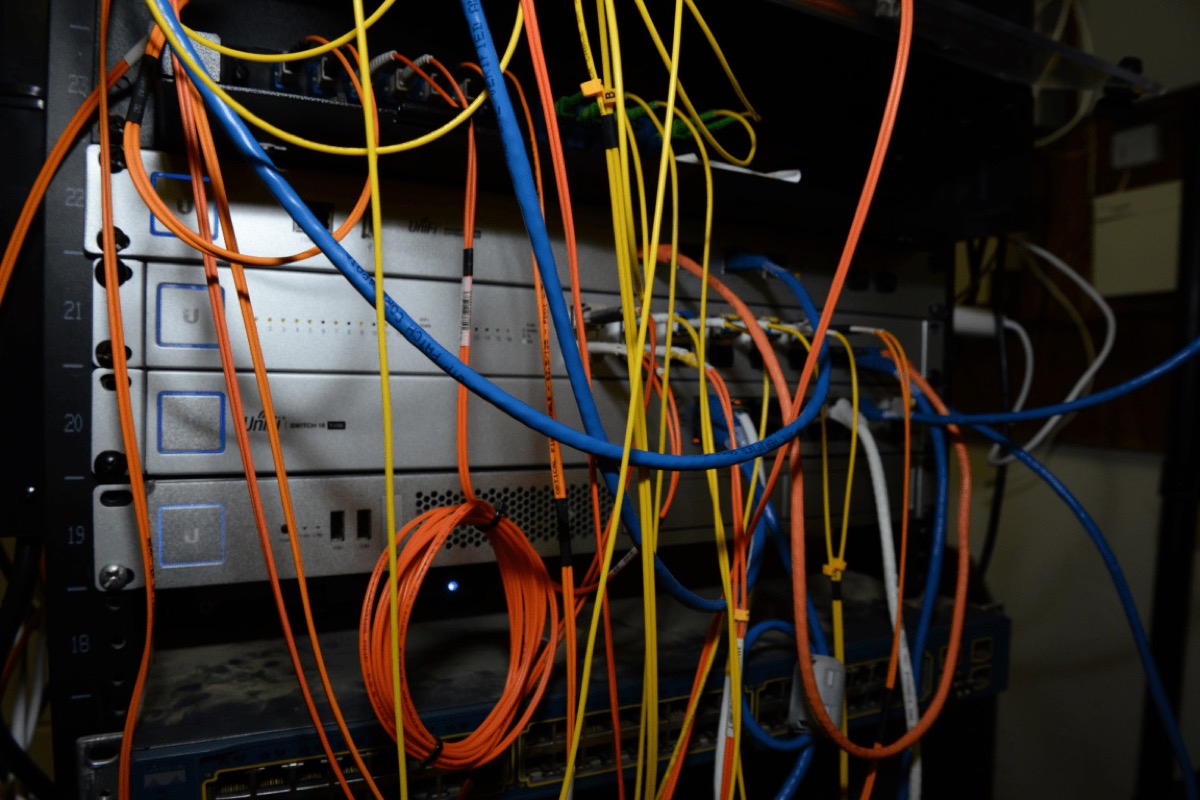
IGMP snooping deserves singling out, because it is the feature most AV networks genuinely cannot live without. Protocols like Dante, AES67, and sACN frequently use multicast, where one source streams to many receivers at once. Without IGMP snooping, the switch has no way to know which ports actually want that stream, so it floods it out of every port, drowning unrelated devices in traffic meant for others. With it, the switch sends each multicast stream only to the ports that asked for it. An LED wall or audio network that "randomly" glitches on an unmanaged switch will very often settle down the moment it is moved onto a properly configured managed one.
A couple of practical baselines follow from this. Use gigabit switching as the floor for any media network, and choose hardware whose behaviour you can actually predict and control. That is the whole reason professional AV is built on managed switches rather than whatever unmanaged box happened to be in the case.
Professional AV runs on managed switches only.